



The Subtle Power of ModaConcrete’s StampShield™ UV Coating
If your “coordinated concrete palette” falls apart after install, it wasn’t the color that failed first—it was the surface. UV doesn’t attack concrete like a hammer. It works like sandpaper made of photons, slowly breaking down the binders and pigments closest to the air until the finish you specified becomes a different finish on the building.
UV doesn’t “fade concrete.” It breaks the finish chemistry first.
Ultraviolet energy primarily damages what’s most exposed: pigments, sealers, and polymeric components at the outermost surface. The early signal is chalking—fine powder at the surface—followed by desaturation and uneven tone. That unevenness is the real problem. East and west elevations take the hardest daily exposure, while shaded faces stay closer to original color, so one installation becomes multiple “versions” of the same finish.
This isn’t an aesthetic issue. It’s a trust architecture failure. When a client approves a palette and the site delivers a drifting patchwork 24 months later, the material stops reading as intentional design.
ASTM maintains standardized accelerated weathering methods (including xenon-arc exposure) used across industries to evaluate color change and coating durability; that’s the baseline for how serious spec teams validate finish performance, not guesswork. See ASTM standards and publications for how these tests are governed.
What StampShield™ is doing at the surface (and why that’s different)
StampShield™ is built around a simple reality: the surface zone is where the project wins or loses. Instead of sitting on top like a brittle film, the goal is penetration and chemical compatibility—so the protection stays put through heat, cool nights, and seasonal cycling.
Here’s the mechanism that matters on precast: a penetrating sealer system reduces moisture movement and helps stabilize the outer pore structure where UV and weather do their work. That reduces the conditions that accelerate surface breakdown, including repeated wetting/drying and the micro-transport of fines that contributes to chalking. Miss this, and the finish becomes a maintenance plan.
What most jobsite-applied sealers get wrong: they treat “coverage” as the objective. On architectural precast, uniform absorption is the objective—especially on units with edges, reveals, and voids. A rolled-on film can look good for a season and then fail unevenly, which is worse than failing evenly.
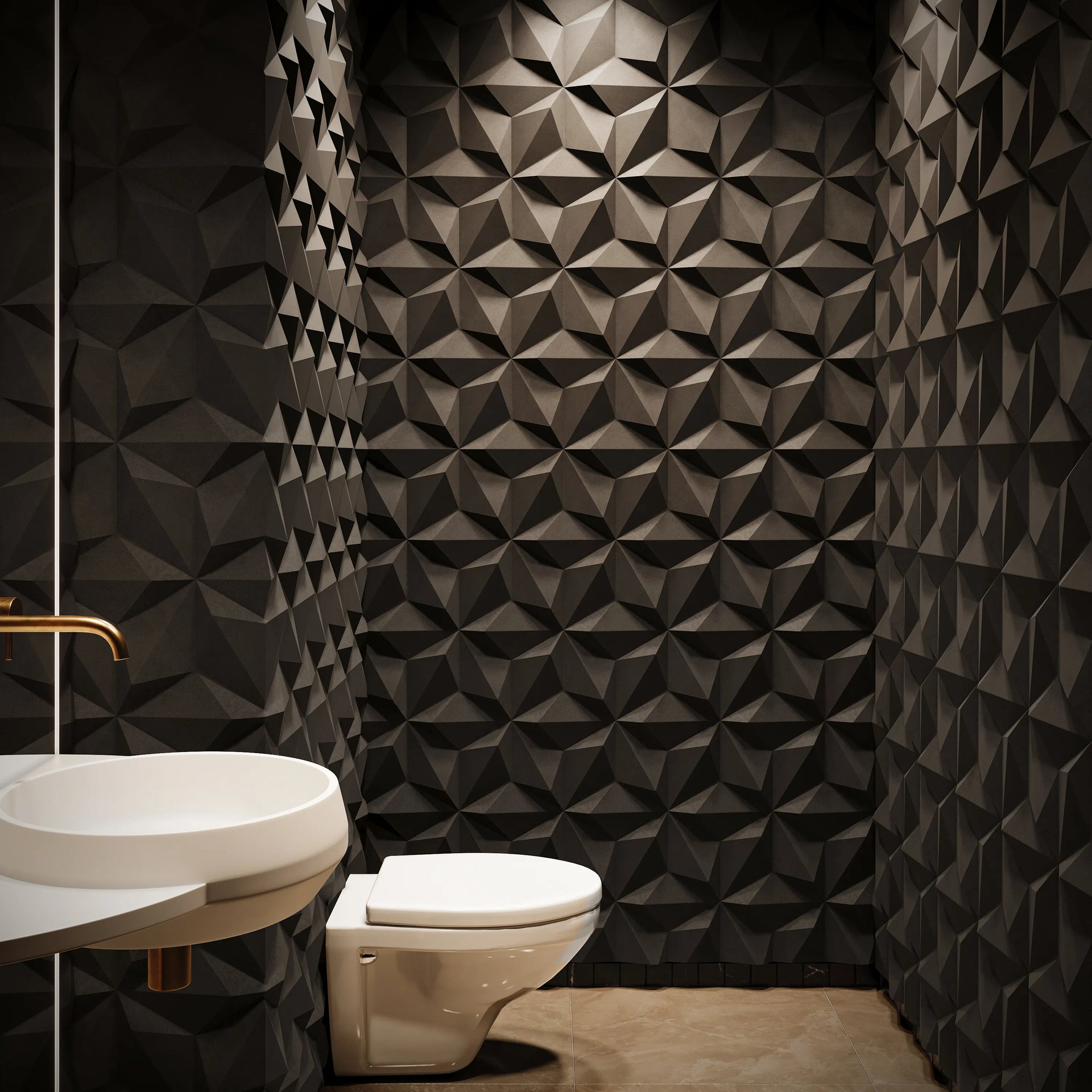
For teams building a consistent palette across categories, that’s why ModaConcrete pairs surface protection with a coordinated approach to finishes. If you’re already specifying across product lines—planters, wall tiles, screens—your weakest surface becomes the color reference for everything else. That’s where projects quietly go wrong.
Breeze blocks expose the failure faster than almost any other precast element
Modern breeze blocks are a stress test for finishes because they multiply exposure. Every opening increases edge length. Every edge is a weathering hotspot. And because screens are frequently used as privacy walls, entries, and pool-side dividers, they sit exactly where sun angles and reflected glare are most punishing.
This is why the best-selling KUBE Breeze Block shows the value of UV protection early: the geometry makes uneven fading obvious. You don’t notice subtle drift on a monolithic wall until it’s severe. You notice it on a patterned screen as soon as the rhythm breaks.
Hyperpressed units also change the equation. Density and precision improve the unit itself, but they also demand a surface treatment that behaves consistently on a tighter pore structure. That’s not a DIY weekend sealer situation. That’s specification-grade finishing.
For a second pattern language with a softer, organic read, the TERRA Breeze Block creates a different shadow profile—but it lives in the same UV reality.
Your current strategy might be creating color drift on purpose
Design teams commonly “solve” finish risk by splitting sourcing: blocks from one vendor, planters from another, tile from a third—then trying to match with paint chips and hopeful lighting. That approach feels safer because no single supplier is a dependency.
It’s the opposite. It manufactures mismatch.
Here’s the consequence that catches people after occupancy: once UV starts pushing each product line in a different direction, you don’t have “patina.” You have a palette that can’t be corrected without replacing pieces. That’s revenue leakage in commercial work (change orders, rework, delayed closeout) and pure trust erosion in residential work (the designer owns the disappointment).
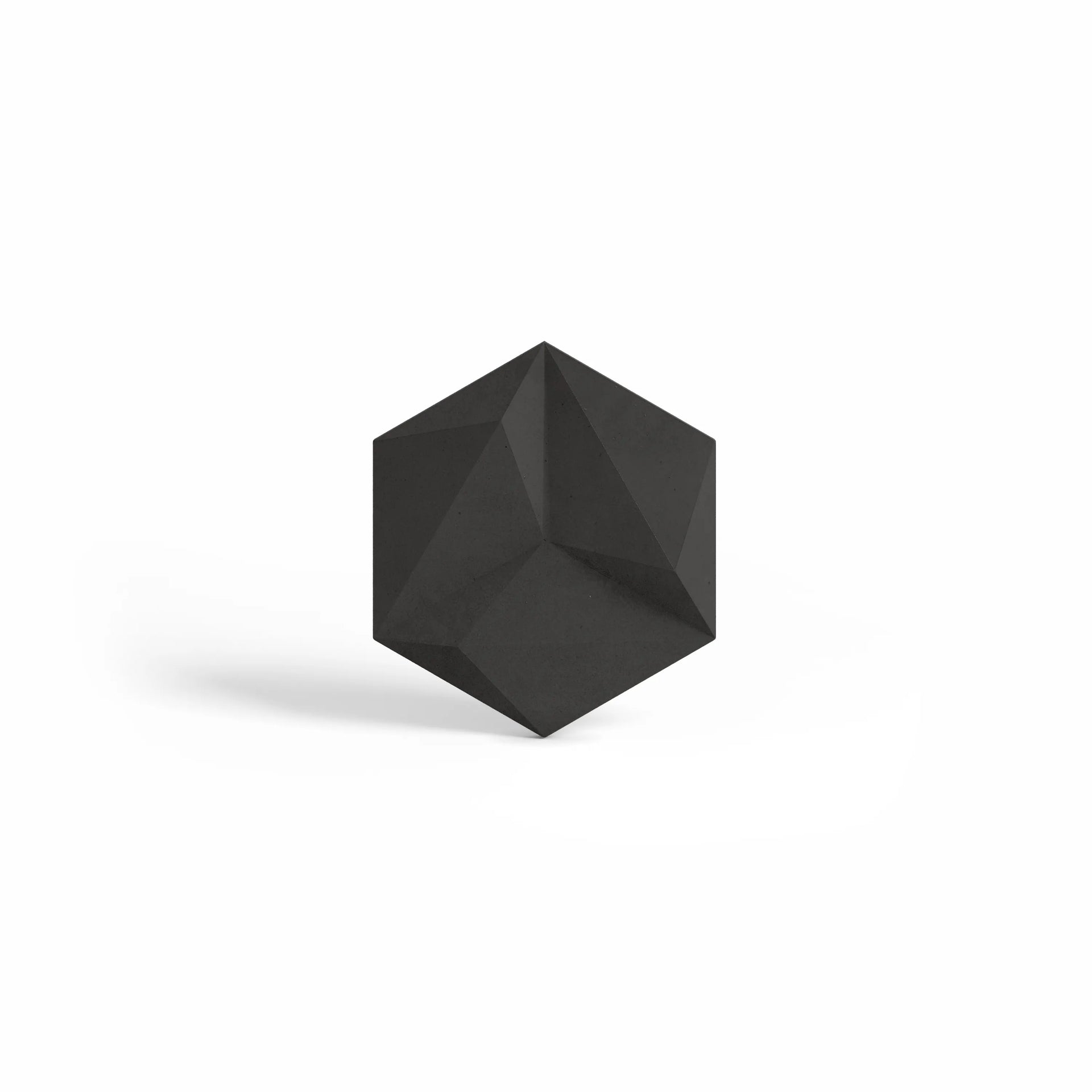
A multi-zone backyard project shows it clearly: an Oceanside Outdoor Shallow Planter in full sun, a shaded wall clad with ORION Concrete Wall Tile, and a screen built from breeze blocks. If those surfaces aren’t stabilized the same way, they don’t age together. Your “coordinated” design becomes three competing materials.
Field proof: what durability organizations actually track
Industry groups consistently document that color and surface durability depend on exposure conditions, water movement, and the compatibility of sealers/coatings with cementitious substrates. The Portland Cement Association publishes extensive technical resources on concrete performance and durability, including how environment and finishing choices affect long-term outcomes.
For broader durability guidance—including exposure classes, moisture pathways, and protective strategies—ACI is one of the primary references spec teams lean on. Start with the American Concrete Institute (ACI) for codes, guides, and technical committees that shape best practice.
And when it comes to concrete in real weather—freeze-thaw, salts, thermal cycling—NRMCA’s research and technical resources are a practical anchor for how cementitious materials behave outside the lab. See the National Ready Mixed Concrete Association (NRMCA).
What an expert looks for: bond, not shine
Materials scientists evaluating protective treatments focus on chemical attachment and stability through thermal cycling, not whether a surface looks “sealed” on day one. A coating that performs on a hot wall at 2 p.m. and a cool wall at 2 a.m. is the coating that stays visually invisible and mechanically reliable.
Dr. Maria Gonzalez, Senior Materials Scientist at the National Ready Mixed Concrete Association, puts it plainly: “The critical variable is not the thickness of the coating but its ability to remain chemically bound to the cementitious matrix under thermal cycling. StampShield™ achieves this through silane grafting rather than simple surface deposition.”
Factory application is the hidden advantage (and why it protects budgets)
Factory-direct manufacturing changes the failure rate because it controls the variables that job sites can’t: cure windows, surface condition at time of application, and consistent coverage on complex geometry. That consistency is what keeps a coordinated palette coordinated.
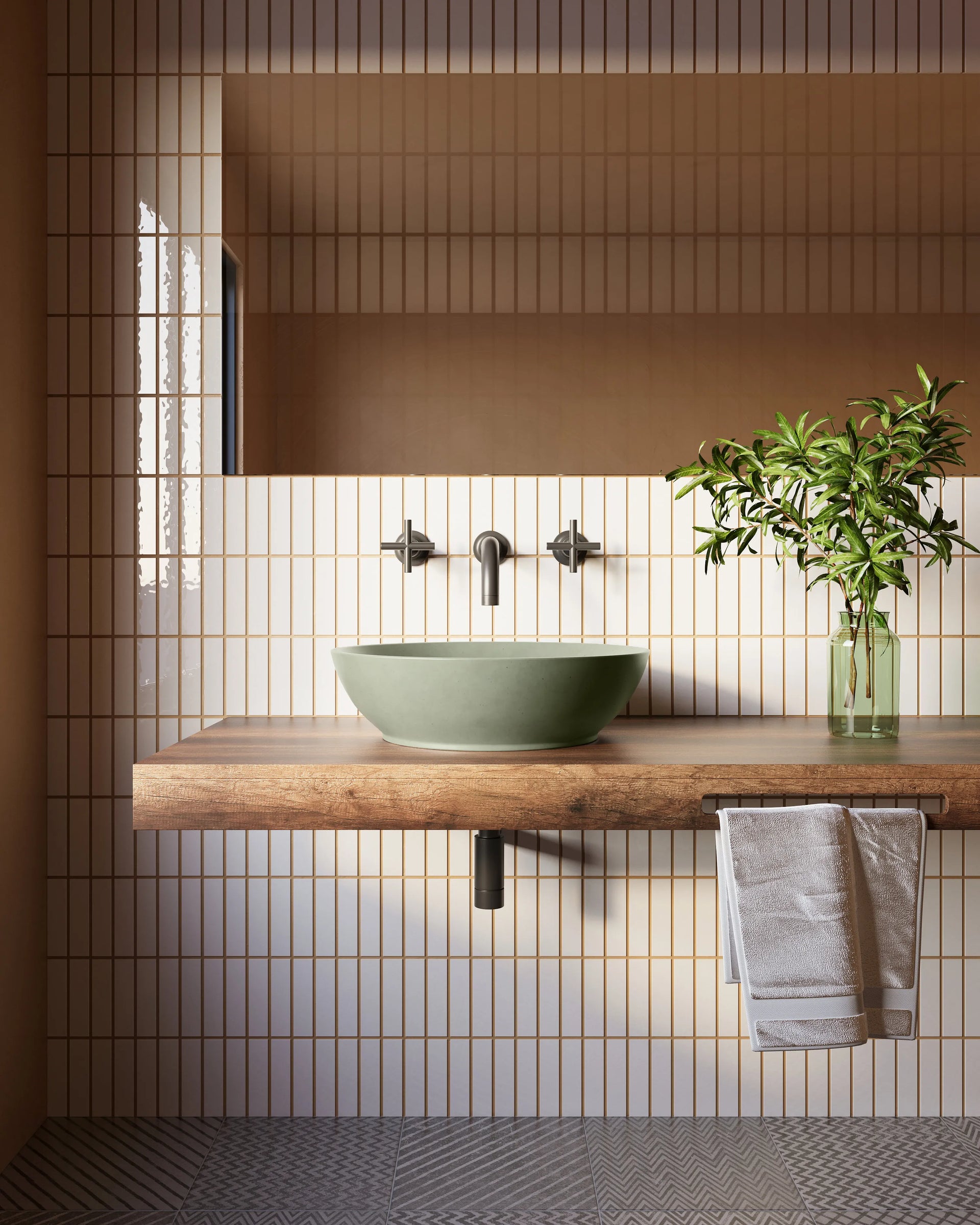
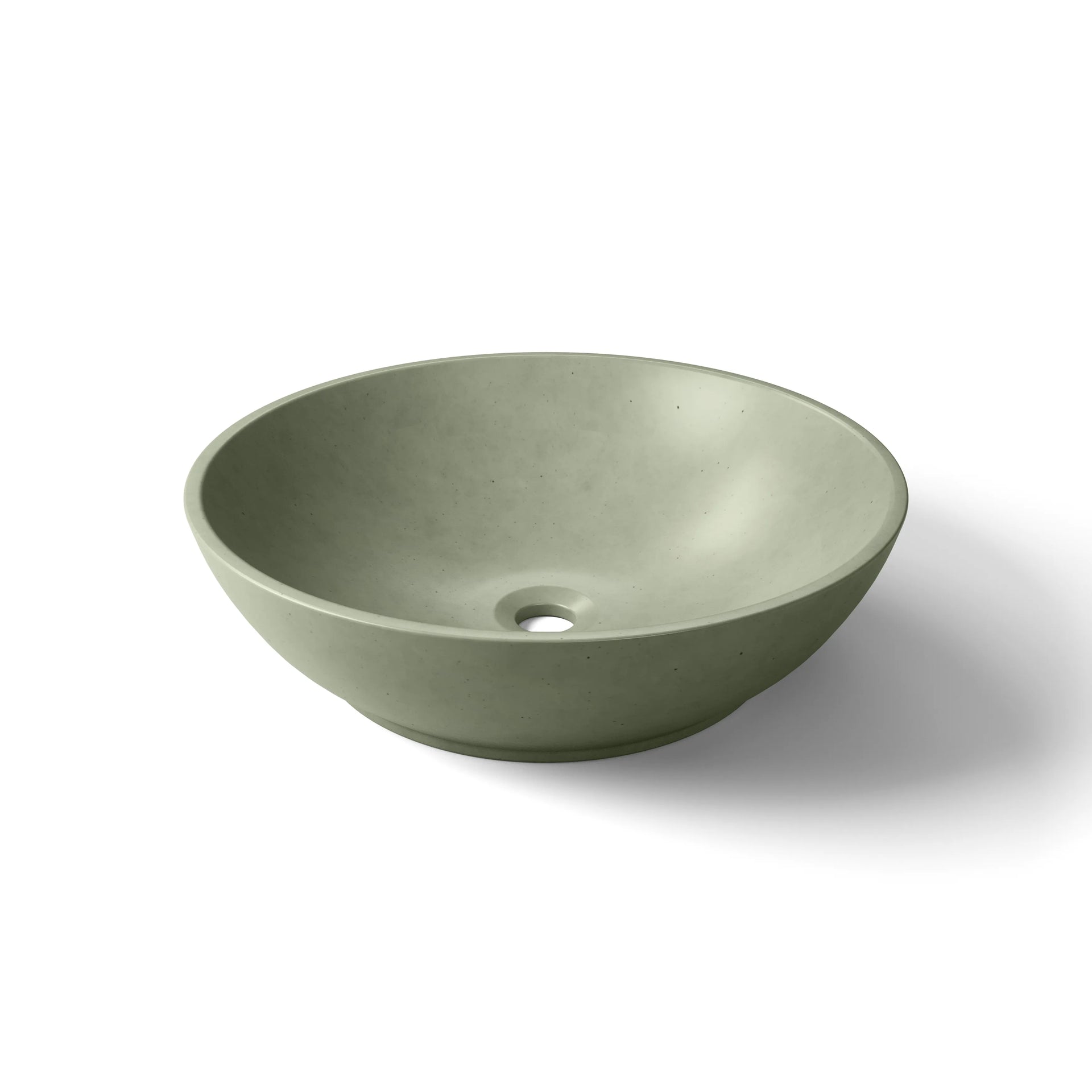
This is where ModaConcrete’s process shows up across categories. A breeze block screen, a sink, and a planter don’t just share a “color name”—they share a controlled manufacturing sequence. That’s why a project can pair the Basin Concrete Sink with exterior elements like the Newport Square Shallow Planter and still read as one material language.
When coatings are left to installers, results swing wildly: over-application, under-application, and missed edges. That’s not a craftsmanship flex. That’s a liability.
A quick, real-world scenario: the rework nobody budgets for
A small-to-mid-size landscape contractor installs a mid-century screen wall using breeze blocks, then finishes the courtyard with matching planters. The client loves the first photos. Two summers later, the sun-facing side of the screen drifts lighter and chalkier, while the planters—positioned under partial cover—hold deeper tone. The contractor gets the call, but there’s no clean fix: touch-ups don’t match, repainting kills the material character, and replacement means demolition and new freight.
That’s the real cost of skipping surface protection: you don’t just lose color. You lose the option to correct it cleanly.
How to decide what to specify (without guessing)
If you’re specifying architectural precast concrete products outdoors, decision quality comes down to three checks:
- Ask what’s protecting the surface zone (and whether it’s penetrating or film-forming). Film failure is visibly uneven.
- Confirm the protection is applied consistently—factory control beats jobsite variability, especially on patterned units.
- Specify across categories with one finish logic, so planters, wall tiles, and screens age together instead of diverging.
For more context on how protective layers preserve long-term aesthetics, see ModaConcrete’s deeper dive: StampShield™ UV Coating: The Slow-building Protector of Concrete Aesthetics.
Frequently Asked Questions
How long does StampShield™ UV coating last on outdoor products?
Service life depends on exposure, maintenance, and installation conditions, but UV-focused protective systems are typically evaluated with accelerated weathering methods (such as xenon-arc testing) to estimate long-term color stability. For project-specific expectations, ModaConcrete can advise based on product type, finish, and site conditions.
Does the coating change the appearance or texture of breeze blocks and planters?
StampShield™ is intended to protect without turning architectural precast into a glossy, plastic-looking surface. The goal is finish stability while preserving the tactile, design-forward character that makes breeze blocks and GFRC planters read as concrete—not as a coated imitation.
Can StampShield™ be reapplied in the field if needed?
Some penetrating protective systems can be refreshed in the field, but uniformity is hardest to achieve after installation—especially on breeze block edges and returns. Factory application remains the most consistent approach for color-critical work.
Which ModaConcrete products use StampShield™ for exterior applications?
StampShield™ is used to support long-term finish performance on exterior architectural precast concrete products where UV exposure is a primary risk—commonly including breeze blocks and outdoor elements. For a specific submittal or finish schedule, contact ModaConcrete with your product list and site conditions.
See the structural patterns UV follows—before it rewrites your palette
Surface protection isn’t a “nice-to-have” add-on. It’s the difference between a coordinated concrete system and a slow-motion mismatch that shows up after the final invoice is paid.
Bring your finish schedule and site exposure notes—then request a StampShield™ technical review from ModaConcrete. That’s the decisive step before your project starts aging in public.
Author Bio
Dante Moretti writes about the material decisions that determine how architectural precast concrete ages. He focuses on what happens in the factory—forming, curing, and surface treatment—because that sequence decides whether a finish holds its intent or drifts into costly correction.